The Forgotten Pivots of History
There have been many pivotal people in western history: Alexander, Augustus, Jesus, Mohammed, Joan of Arc, Gutenburg, Luther, etc.
The following is a list of people who decisively altered the course of history -- in ways both good and bad -- but remain overlooked.
 |
|
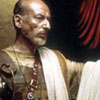
IMHOTEP of Egypt (2635-2595 B.C.)
Imhotep was so skilled as a doctor, mathmetician, and architect, that he was later declared a god. Inventor of the Egyptian pyramid, he was the first to harness the productivity of the Nile Valley to massive infrastructure construction, and established the Egyptian Civilization as the "Mother Culture" of the Western World. |
 |
|
CLEISTHENES of Athens (570-? B.C.)
As an Athenian politican under pressure from his aristocratic rivals, Cleisthenes turned to an unprecendented source to gain political leverage -- the People. He reformed and organized the existing governmental system into one based on the direct participation of all Athenian citizens. In so doing Cleisthenes created the world's first-known constitutional democracy. |
 |
|
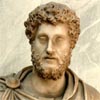
COMMODUS of Rome (180-192 A.D.)
Commodus became Emperor at the moment the Roman Empire reached the apex of its power and wealth. Decadent and violent, he squandered the inheritence left to him by five great Caesars. All later observers would pinpoint his reign as the beginning of the Western World's long, anguished decline into the Dark Ages. |
 |
|
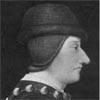
LOUIS XI of France (1423-1483}
Considered by his contempories as ugly and treacherous, Louis XI the "Spider King" was nonetheless an extremly effective monarch. He disdained the trappings of feudal fashion and instead focused on consolidating the state. Bowling over the limitations imposed by tradition, he created the model by which Western nations could raise themselves from the chaos of the medieval world. |
 |
|
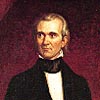
JAMES KNOX POLK of the United States 1795-1849)
Nominated for President only because the protagonists could agree on no one else, Polk laid out his agenda -- and fulfilled every part of it. Using a combination of diplomacy, bluster, bribery, and open war, Polk conquered the territories that would later become the bulk of the western United States. In so doing, he built the foundation upon which the U.S. would rise to become a global superpower. |
 |
|
GEORG RIEMANN of Germany (1826-1866)
Riemann was an obscure mathematics professor, little-known in his own time. Yet his profound calculations would turn Euclidian geometry on its ear, and lay the mathematical foundation for Einstein's relativity. His theorems, even today, are used in the attempt to build the Unified Field and String Theories -- revolutionary branches of mathematics more comfortable in the 21st century than in the 20th. |
 |
|
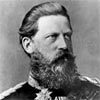
FREDERICK III of Germany (1831-1888)
Frederick was the son of the King of Prussia at the time Bismarck was building the German Empire. He was liberal, well-spoken, married to the daughter of Queen Victoria of England, and loved by the people of Germany. He became the second Kaiser of the Second Reich, but died of cancer after ruling only 99 days. If he had lived, he undoubtedly would have steered Germany on a path towards conciliation, and spared the world the bloody agonies of the 20th century. |
 |
|
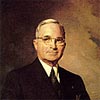
HARRY TRUMAN of the United States
Selected almost as an afterthought, President Truman made some of the most crucial decisions in modern history. He authorized the dropping of the A-Bomb; he ended World War II; he established "containment" as the strategy best suited to win the Cold War and then defended that strategy in Greece and Korea. His instincts were correct, and 38 years after he left office, the U.S. has become the lone superpower in the world. |
Who should be added?