IMHOTEP
of Egypt
2635 to 2595 B.C.
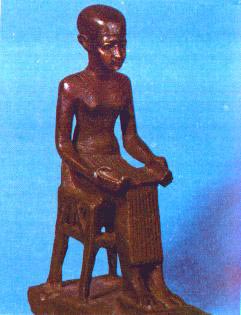 Imhotep was an official during the 3rd Dynasty and served under four pharaohs. He is best known for his position as vizier and high priest of Ptah during the reign of pharoah Djoser I. Imhotep was a commoner by birth, but rose through the ranks with his natural talents and dedication. Imhotep was called the "Son of Ptah" (Ptah was the Egyptian god of writing, learning, and wisdom) but didn't limit himself to religious matters alone. He was a very good poet, architect, and priest-physician. The greatest achievement of Imhotep is the Step Pyramid at Saqqara. It was the first of its kind. He built this pyramid for Djoser, but it became an architectural model for the spiritual ideals of the people of Egypt.
Djoser's Step Pyramid was not just a tomb, but was a collection of temples, pavilions, corridors, chapels, halls and storerooms. His plan included fluted columns that were attached to the limestone walls, which conformed to the walls in the palace. This preserved a link with the past in the ancient styles of architecture.
His best known writings were medical writings. He was honored by the Greeks during the Roman period. The emperors Claudius and Tiberius had inscriptions praising Imhotep placed on the walls of their Egyptian temples.
Imhotep existed as a mythological figure in the minds of most scholars until the end of the nineteenth century when he was established as a real historical personage.
Revered as a god, a patron of scribes, a sage, and leader, Imhotep is often considered the world's first true architect.