 |
|||||
 |
|||||
 |
|||||
|
|||||
 |
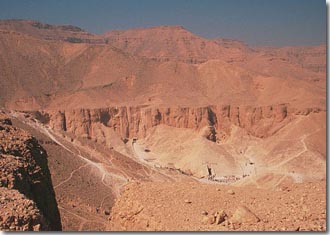
VALLEY of the KINGS |
 |
|||
 |
|
||||
The major temples include the Ramesseum - the famous mortuary temple of 19th-dynasty pharaoh Ramesses II. Medinet Habu was Ramesses III's attempt to copy his ancestor. The complex was added to over the centuries following, but it is most impressive and shouldn't be missed. The artisans from the nearby town of Deir el-Medina moved in to the compound when things got unsafe and the construction of Royal tombs in the Valley of the Kings came to a halt. The mortuary temple of 18th-dynasty Queen Hatshepsut is a masterpiece of design and has been under restoration for about a century. It is built into a natural amphitheatre in the cliffs and does not look out of place in the 20th century, even though it was constructed during the early 15th century BC. However, there are many other more impressive tombs. There is no guarantee which ones will be open during a visit, but try to see those belonging to Thutmose III (the Napoleon of Ancient Egypt), Ramesses III, IV and VI, and Horemheb. That of Horemheb contains examples of how workmen created wall reliefs. The tomb of Seti I is a masterpiece, but structural problems keep it closed these days.
|
|||||
Home | Nile Valley | Dynasties | Wealth | Divinity | Temples | Hieroglyphs | Mysteries
|
|||||